New direction and intention. Expectation vs habit. Readiness for change is not static.
It’s no easy feat to introduce a new direction and modality to a familiar business model. To transition from what everyone knows you for and expects you to do to something unfamiliar is tricky and precarious. While I’m bouncing on the spot with wide eyed awe at what neuroscience can teach us about our nervous system, brain and body, I don’t see many other bobbing heads rebounding….and my diary is patchy.
Is Sue still doing what I know and love and expect her to do? What is this brain-based training she’s gushing on about? Is she going to ask me to participate in weird one-legged drills with my eyes closed when all I want to do is lie down? These are all reasonable assertions but if you’re wondering whether I still do the work you’ve come to expect—yes! But I’ve also learned something that has changed everything for me, and I can’t ignore it. And trust me, when you experience it, you won’t want to ignore it either.
I have found myself worrying, thinking and pondering on the current shift of change, the gaps appearing in my diary. Then a thought came to me while meditating. My direction and intention is to educate and inspire clients to have limitless responsibility for their nervous system, brain, balance, posture and movement. I remind myself to not completely freak out, just breathe and believe.
So why isn’t everyone bouncing up and down with excitement and joining my imaginary 6 month waitlist? Maybe my language, the way I educate and engage is not inspiring thoughts of “I need this” or “I can’t believe there is someone I know and local to me who is actually doing this stuff, this is amazing!” People just don’t know. Simply, that is it and it’s up to me to explain it in a way that is reachable, exciting, engaging, inspiring and educational.
Reframing suggests a shifting of creative thoughts, challenging dominant representations and revealing hidden perspectives.
When we think about change in business, we often see it as a response to problems – something forced upon us. But what if we treated change as an act of creation instead?
Gilles Deleuze : “To think is to create – there is no other creation – but to create is first of all to engender ‘thinking’ in thought.”
In other words, true change isn’t just about adjusting strategy, it’s about shifting the way we think entirely. Reframing my business model isn’t just a necessity, it’s an opportunity to learn and be curious and innovate in areas that are too exciting not to share. It as a creative act of introducing clients to a subject that I feel cannot be hidden. Neuroplasticity is as discovery that will blow your mind. Let’s get creative!
I have been practicing a special meditation mandala twice daily now for 32 days the goal is 40 days. Today’s insight shift is ‘flipping it’. Meaning recognising habits, assumptions, emotions triggered by events then flipping predisposed reactions and intentionally shifting them towards curiosity and understanding. For example;
I had two clients cancel their appointments this week because of pain. From a neuroscience perspective the reality is that people tend to make decisions based on previous experiences and habits and not that they may think I am not doing my job properly or have failed them. Responding to this from a meditation and brain-based perspective has completely flipped how I once would have felt – disappointment and feeling they are not happy with my work. I listened and I heard what was being said.
‘My elbow hurts, based on previous pain I know what to do to protect myself. I will rest it and ice it and cancel my appointment with my therapist just in case she asks me to do something that I don’t feel comfortable or capable of doing right now.’
Based on previous experiences the client makes decisions to keep themselves safe. Fair point. Our brain is constantly assessing the world in relation to inside and outside our body and our environment for safety and then it gives the green light to proceed i.e move or act.
Simply put your brain has two jobs: safety and movement.
1. Is it safe? 2. Can I move?
Add pain to the mix of relentless assessment and the threat prediction elevates exponentially.
Think of pain as an output it’s a construct from the brain, it is an experience, an event, a personal perception. It can have many input factors, beliefs, expectations and consequences, life situation, anxiety and fatigue to name a few. Remember the two key survival factors of the brain. Is it safe? How threatening or dangerous is it out there really? Based on all of this information is it safe to move?
To finish up, another learning curve during this process of shift in my practice is to listen and hear the answer to my question ‘What are your expectations?’. Even if I know that tracking your eyes horizontally to the left in a smooth pursuit can activate your right PMRF (located in the brainstem, some simple eye movements can up regulate this part of the brain to help reduce pain), which can help to inhibit pain in your right elbow. I need to hear you and listen to you otherwise you may roll your eyes at me.
My purpose is to continue to be curious, research and learn so I can provide you with the most effective and intelligent shortcuts you can do to change habits, make great decisions and lead a better life. To educate and inspire to begin building skills and knowledge and change behavioural patterns that are potentially wearing you down.
That’s a blast from me hope you enjoy.
With L.O.V.E
Sue ?
P.S Connect with me for a free 15min chat on how applied neuroscience can help you rewire your pathways. It’s an ongoing learning practice for me! And it’s just the beginning….
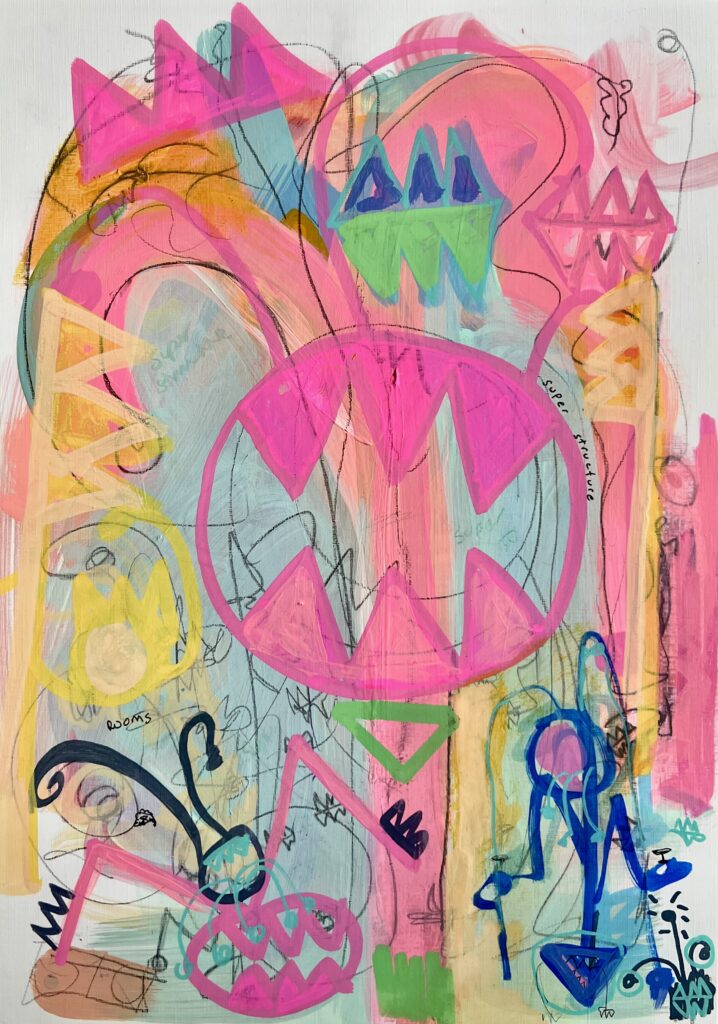
image ©SGART 2025 original artwork available for purchase enquire sueglasgow@mac.com